Intro
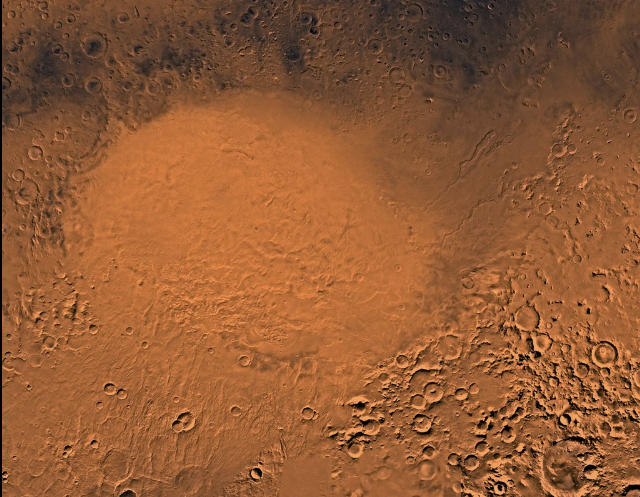
Hellas Planitia, Mars' largest visible impact basin at approximately 2,200 kilometers in diameter, boasts the planet's lowest surface elevations and a diverse range of terrains. The region is marked by several substantial patera or low volcanoes like Tyrrhena, Hadriaca, and Amphitrites, situated along or near the basin's rim, with their lava flows partially covering the ancient impact features. Outside the rim, you'll find large, curved escarpments facing inward, possibly remnants of multiple concentric rings. Hellas Planitia exhibit a complex geology, featuring fluvial channels, lacustrine, glacial, eolian, and volcanic deposits, reflecting a dynamic history. Frequent dust storms are a common occurrence within this basin.