ABOUT TRAVEL
~ Accommodation ~
Introduction
Hygiene Environment
1. Restroom
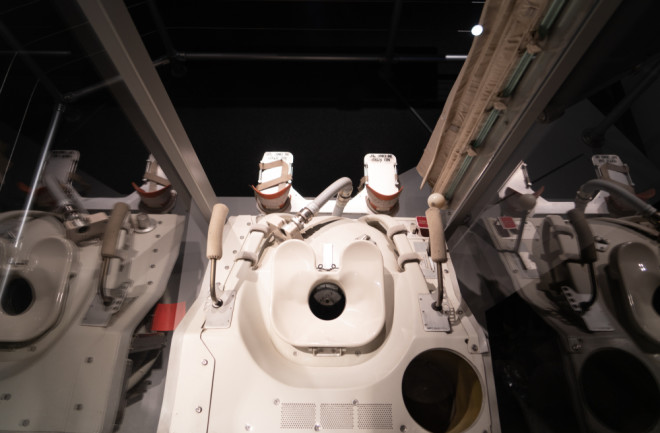
On spacecraft, there are dedicated space toilets designed in a closed system to ensure hygiene and safety in a zero-gravity environment. These space toilets use airflow and suction to draw waste into storage containers, preventing it from floating around the spacecraft and helping control odors. These systems are typically highly automated. However, passengers still need to undergo special training to ensure they can operate the space toilet correctly. This training includes simulations of operations in a zero-gravity environment. Astronauts are usually secured to prevent drifting during toilet use, and items like toilet paper are kept in waterproof bags for convenience.
This breakfast is said to be a traditional favorite of astronauts, combining two healthy and nutrition-packed ingredients, steak and eggs. The steak provides high-quality protein and essential iron, helping astronauts maintain energy and muscle mass during their space journey. Eggs are an excellent protein source as well as a rich source of various vitamins and minerals, including Vitamin D, Vitamin B12, and calcium. This breakfast provides ample energy for astronauts to face a day of space exploration.
2. Bathroom
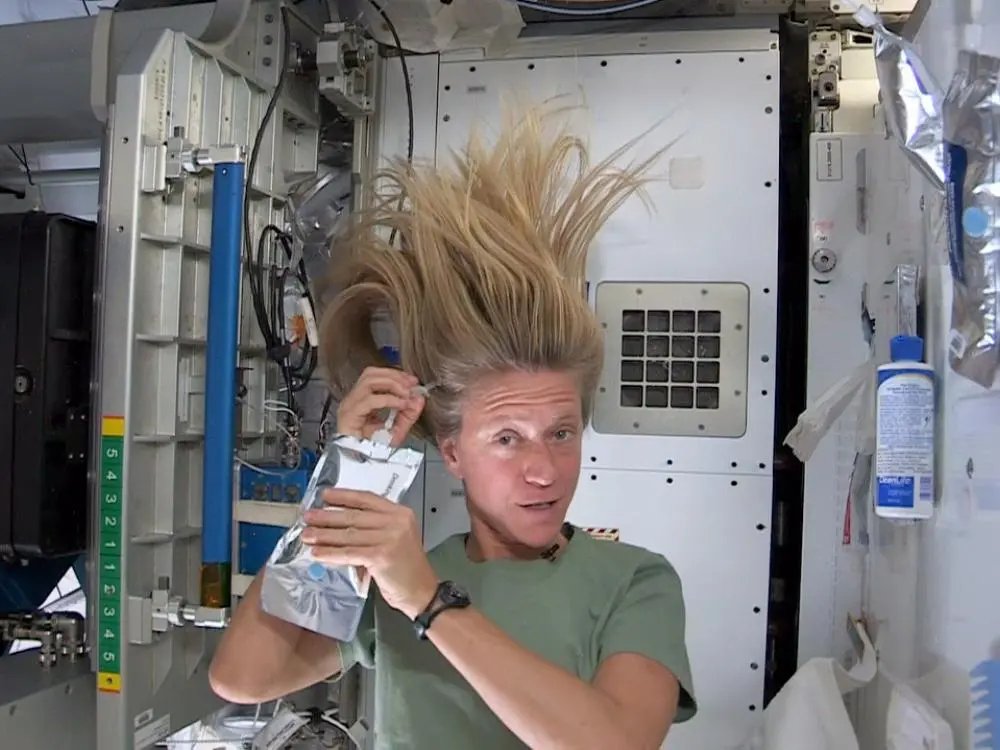
Living in space requires the same hygiene needs as on Earth. Astronauts need to wash their hair, brush their teeth, and shave just like anyone else. However, due to the unique microgravity environment, self-care in space is slightly different.
Typically, we use rinseless shampoo to wash hair, a product initially developed for hospital patients who cannot take regular showers. Passengers can also inform us about their preferred personal care products, including toothpaste, so we can prepare customized personal hygiene kits that include the items they choose to bring.
Additionally, in a zero-gravity environment, traditional water rinses for bathing are not feasible. Instead, astronauts use sponge baths with two washcloths: one for applying soap and another dampened with water from a drinking pouch for rinsing. This method effectively replaces the need for water rinsing. Hair washing also involves the use of rinseless shampoo. In microgravity, water and soap suds adhere to the skin, and excess water is suctioned into a wastewater tank. Tooth care in space is quite similar to Earth, but astronauts can swallow or suction out toothpaste, similar to a dentist's office. These simple hygiene routines require only 150ml to 200ml of water, helping conserve water resources.
Despite the differences in the space environment compared to Earth, expl@net has methods to assist passengers in maintaining good personal hygiene practices to ensure their health and comfort.
Sleep Environment
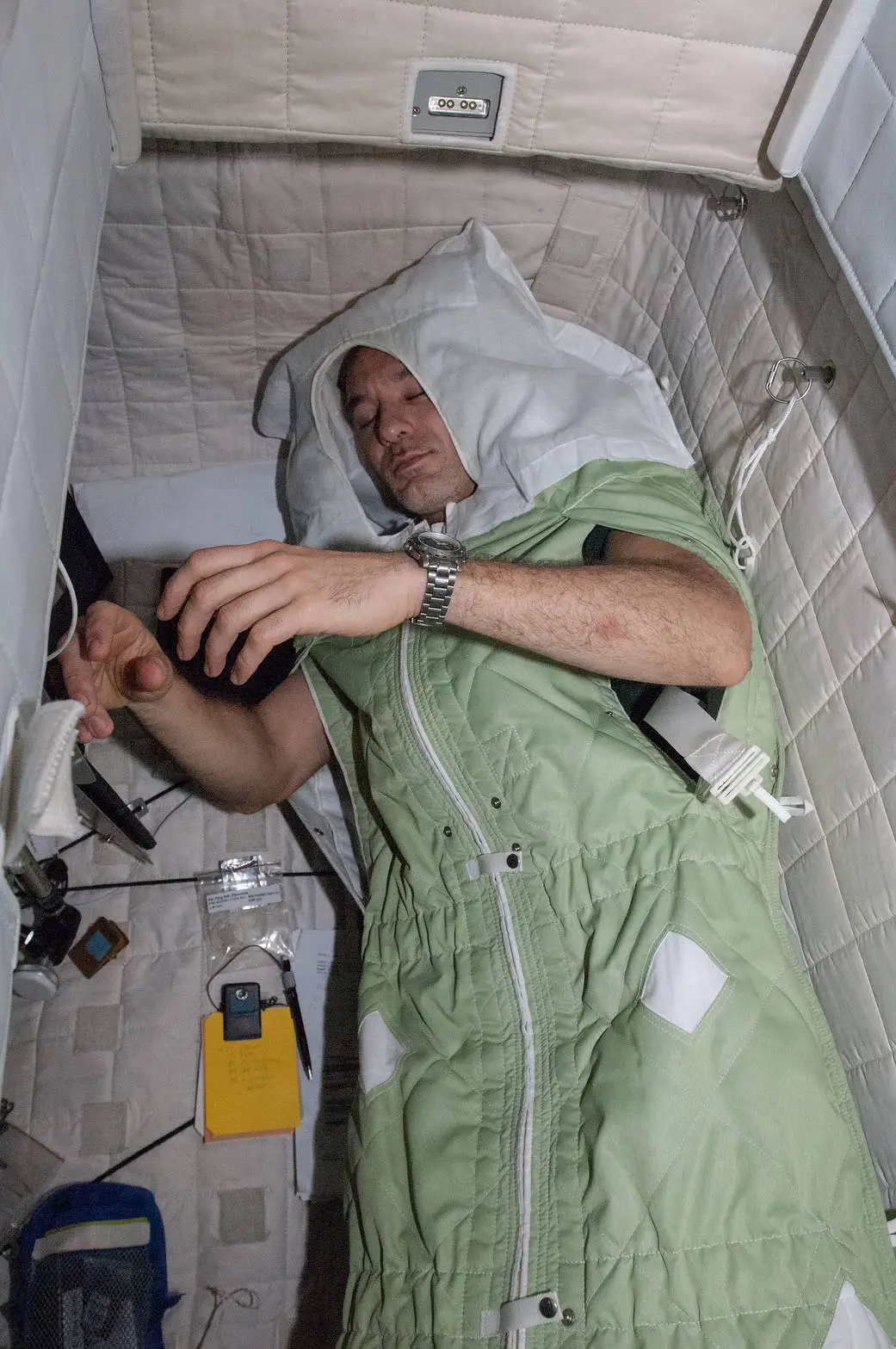
How to sleep in space? Getting adequate rest and sleep is essential during space exploration to maintain mental well-being and overall health. Therefore, we provide individual rest areas and sleeping bags within the spacecraft. These sleeping bags are designed vertically since determining an upright position in microgravity is not practical. Moreover, to ensure that sleepers do not inadvertently drift away from their position during sleep, we secure the sleeping bags to prevent any unexpected incidents.
All rest compartments are positioned near ventilation ports to prevent excessive carbon dioxide buildup within the space during sleep, ensuring passenger safety. Additionally, to monitor the quality of passengers' sleep and their physiological status, we provide physiological monitoring wristbands as an added layer of protection. Research has shown that maintaining a regular circadian rhythm can impact human health. Therefore, we follow a light regulation method to adhere to circadian rhythms, helping to maintain human physiological functions and stimulate sleep responses in space.
We hope that these measures will allow passengers to enjoy a day of exploration and then achieve a restful night's sleep.
GYM
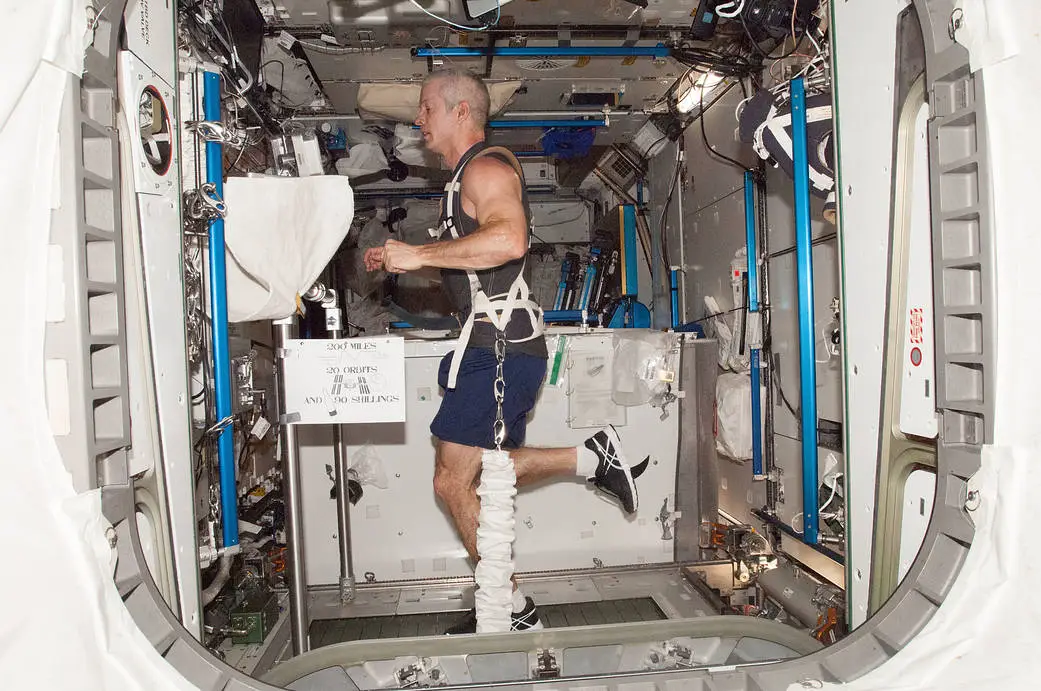
Do you have a regular exercise routine? In space, exercise is an essential requirement to prevent muscle and bone loss. Each passenger in space needs to engage in two hours of exercise every day. However, in the microgravity environment, which exercises can truly provide resistance to maintain muscle strength? Here are the exercise equipment we can provide for passengers:
1. Simulated Free Weight Training under Normal Gravity: The primary goal is to maintain passengers' muscle strength and bone density
during long-term stays in space.
2. Stationary Exercise Bike: It is fixed to the floor, and passengers secure their feet on the pedals. Safety straps can be used to
keep passengers stable, and different resistance levels can be adjusted.
3. Treadmill: It is equipped with data collection equipment that can display real-time data and assess the impact of exercise on
reducing bone and muscle density loss caused by microgravity. It allows passengers to walk and run at speeds ranging from
4.8 to 20 kilometers per hour.
4. The latest NASA invention, ROCKY (Resistance and Cardiovascular Kinematics): ROCKY is a new type of exercise equipment.
Passengers can use it for aerobic exercise, similar to using a rowing machine, and it can provide resistance training of up to
400 pounds. They can perform exercises like squats, deadlifts, heel raises, bicep curls, upright rows, and more. The equipment
can be customized with specific workout plans for each passenger's needs. It integrates features from another evaluated
device called the Device for Aerobic and Resistive Training (DART). It can provide load settings similar to free weight training
to stimulate users' muscles.